

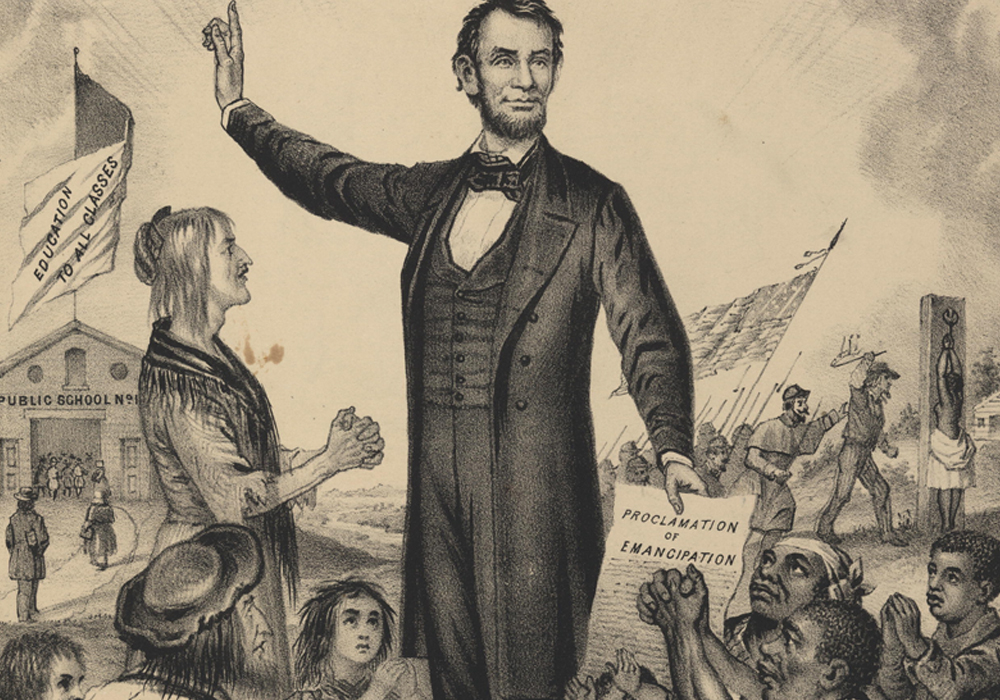
 Few documents in U.S. history share the hallowed reputation of the Emancipation Proclamation. Many, perhaps most, of my students have heard of it. They know — at least vaguely — that it pronounced freedom for enslaved African Americans, and earned President Abraham Lincoln the title of Great Emancipator. They know what it says, but no one has read it. Every U.S. history textbook mentions it, but I’ve never seen a single textbook that actually includes its full text.
Here, students examine excerpts from Lincoln’s first inaugural address, the rarely mentioned original Thirteenth Amendment to the Constitution that Lincoln promised to support, and the Emancipation Proclamation. This lesson asks students to think about what these documents reveal about Lincoln’s war aims. Was it a war to free the slaves? Lincoln never said it was. Most textbooks don’t even say it was. And yet the myth persists: It was the war to free the slaves.
Elementary School Adaptation
Following a discussion about the Emancipation Proclamation and Abraham Lincoln we really wanted our 3rd and 4th grade students to critically think about who was responsible for freeing enslaved people from bondage. We were excited about the prospect of using the lesson A War to Free the Slaves? in our curriculum knowing how successful role playing has been for our students in the past.
Given that this lesson was written for an older audience we had to make several modifications. First, our Diversity, Equity, Belonging, Inclusion, and Justice coach edited each of the perspectives in the lesson so that the reading level and format of the documents were accessible to our students. Arguments for each perspective were separated from the evidence and a list of key vocabulary words was provided at the bottom of each perspective. We knew this lesson would require more teacher support, so when we divided students into each perspective we also assigned a teacher leader to each group.
In the perspective groups, we read the arguments and evidence, summarized each into a statement, then worked together to create their presentation to support the statement: _____ is responsible for freeing the slaves. The students wrote short paragraphs stating their opinions and using evidence to support their opinion.
One student wrote,
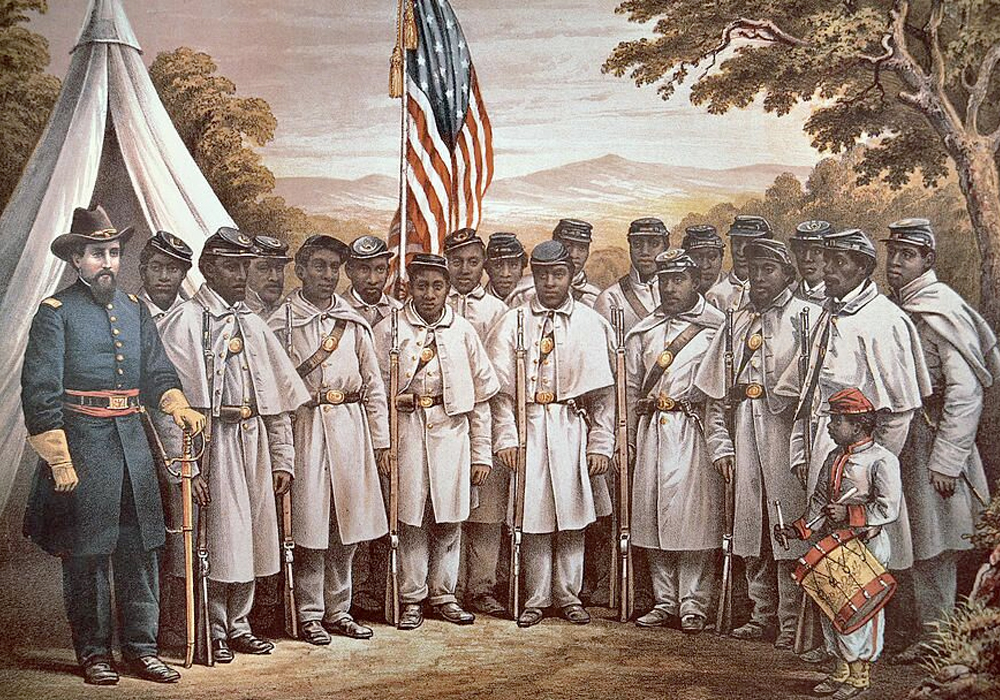
I think that abolitionists and the Black soldiers freed the slaves because the abolitionists told and convinced President Lincoln to write the Emancipation Proclamation. I also think that Black soldiers freed the slaves because without the Black runaways we would have likely lost the war.

Need more of our Black History to be told and read!